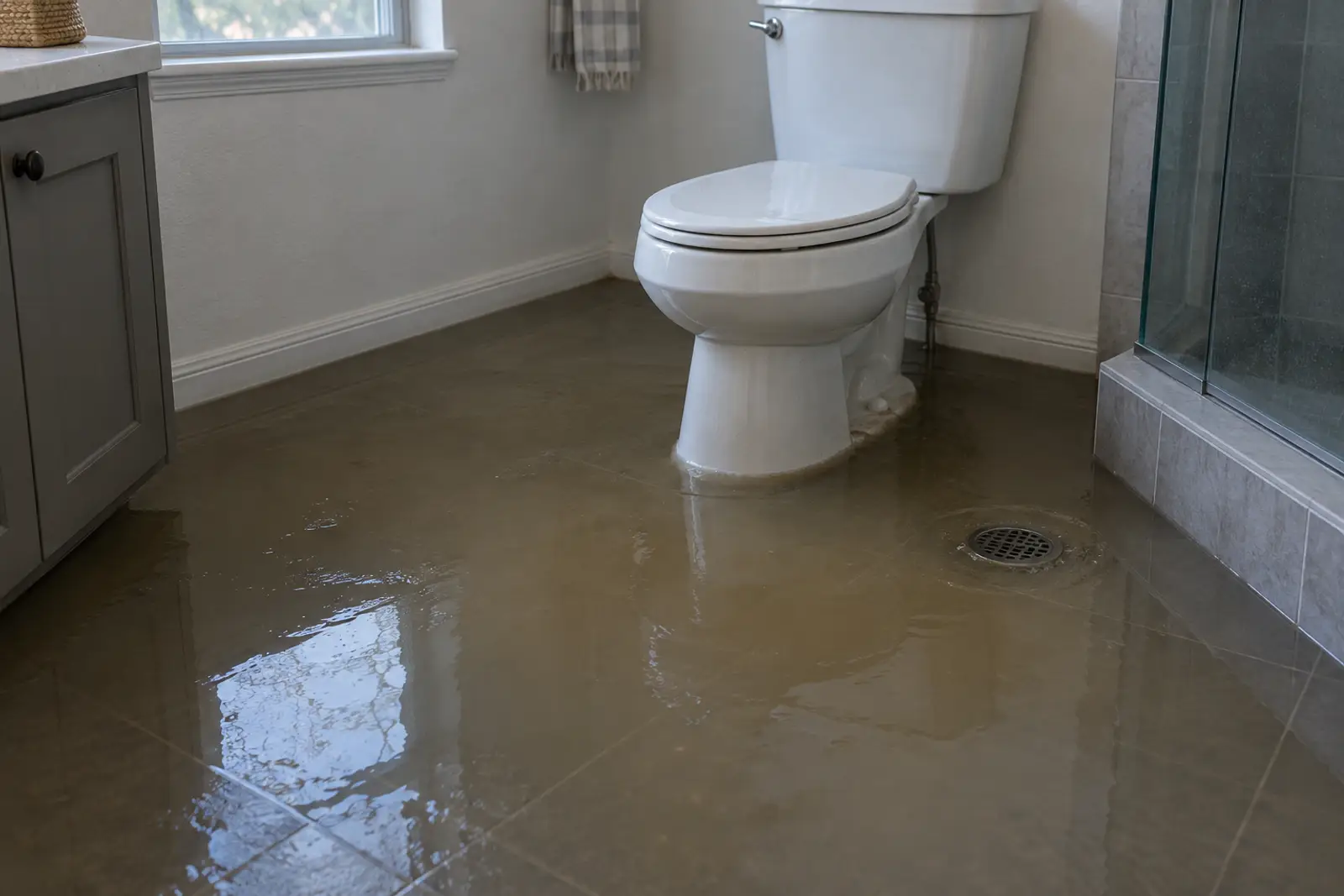
Murky water spread across a bathroom floor around the toilet

Sewage backup cleanup in Hurst, TX

When a drain starts pushing back, two things need handling: the blockage and what already came inside. They're different jobs.

Call (817) 989-2837

"For immediate water, waste water, traffic or street problems, please call our 24/7 Public Works Dispatch at 817-788-7212."

— City of Hurst, Wastewater Division

If the blockage turns out to be in the city's line, that's the number. The city maintains roughly 155 miles of sewer collection lines. The cleanup inside your house is ours to arrange either way.

Keep it safe

Sewage is Category 3 water — it carries bacteria and viruses, not just smell. Keep children and pets out of the area. Don't run any more water down any drain in the house until you know where the blockage is; every flush or shower adds to what's coming up.

If it's reached carpet, rugs or upholstered furniture, leave them where they are. Moving them spreads it.

Wear gloves if you have to touch anything, and wash hands after — even if they look clean.

Your line and the city's

In Hurst, the line running from your house out to the point where the city's system takes over belongs to the homeowner. The city handles blockages in its own lines.

The signs can point either way. If only one fixture is backing up, the problem is usually a single drain inside. If both toilets won't flush and water is coming up in the shower, the blockage is further down the line — on your side or the city's. A plumber can clear and camera your line; if they find the problem is past your section, that's a call to Public Works Dispatch.

What the cleanup involves

Clearing the line is a plumber's job. What the crew this number reaches does is everything after:

The contaminated water gets extracted. Anything porous it touched — carpet and pad, the bottom of drywall, insulation, particle-board cabinet bases — is removed and bagged. Hard surfaces are cleaned and treated with antimicrobial products. The area is dried with the same equipment as any water loss, and checked with meters before rebuilding starts.

The crew works in protective gear and keeps the affected area sealed off from the rest of the house while they do it.

What usually comes out

Sewage isn't a "dry it and keep it" loss. Carpet and pad, mattresses, upholstered furniture, cardboard, paper, and drywall and insulation below the water line usually can't be saved. Tile, sealed concrete, metal and solid wood often can, once they're cleaned and disinfected.

Photograph everything before it's removed. Insurers ask, and sewer backup cover is often a separate add-on to a homeowners policy — worth checking early.

FAQ

Sewage is backing up into the shower. What do I do right now?

Stop using water anywhere in the house — no flushing, no dishwasher, no laundry. Keep people and pets away from the shower and anything it's reached. Then get the line cleared and the cleanup arranged; the two can happen the same day.

We think tree roots are in our sewer line. Is that the city's problem?

If the roots are in the part of the line between the house and where the city's system takes over, it's the homeowner's to fix — usually a plumber clearing it and, if it keeps happening, a repair. If a camera shows the problem is past your section, the city handles it.

Can someone just come out and snake the line?

That's a plumber's job, and a plumber is who to call to clear it. This number reaches restoration companies for the cleanup — extraction, removing what can't be saved, disinfecting and drying.

Can I clean up a small backup myself?

A small spill on tile, caught straight away, is manageable with gloves, disinfectant and everything that touched it bagged and thrown out. Once it's reached carpet, drywall or anything porous, or it's more than a small area, professional cleanup is the safer call.

Sewage in the house?

Call (817) 989-2837. Answered any hour across Hurst. Free call, no obligation.

Call (817) 989-2837