Heat and flame
Charred framing, melted fixtures, damaged wiring. This is the part that needs assessing for safety first, and the part most likely to need rebuilding rather than cleaning.
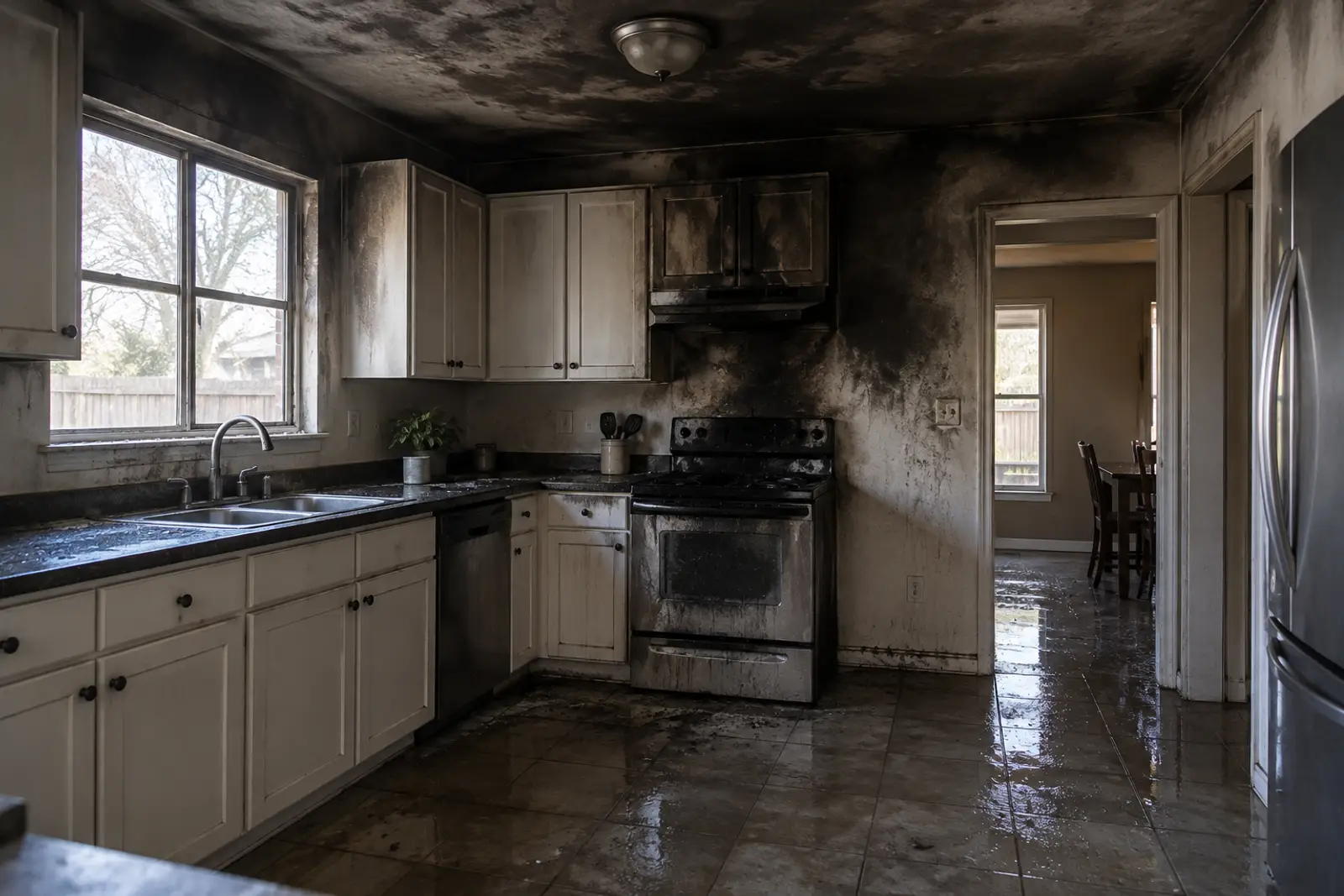
The fire is out. What's left is usually three problems at once — heat damage, smoke and soot, and a lot of water.
Call (817) 989-2837After a fire, the house often looks worse the next morning than it did that night. Soot settles. The water used to put the fire out soaks further into floors and walls. Smoke residue is acidic, and on some surfaces it starts etching and discoloring within days.
That's why restoration after a fire is time-sensitive in a way people don't expect. The structure may be safe to leave for a while; the water and residue aren't.
Charred framing, melted fixtures, damaged wiring. This is the part that needs assessing for safety first, and the part most likely to need rebuilding rather than cleaning.
Residue on every surface the smoke reached — often rooms away from the fire. Different fires leave different residue, and each needs its own cleaning method. The smell is in the drywall, insulation and ductwork, not just the air.
Firefighting puts a lot of water into a house in a short time. It sits in flooring, runs into wall cavities, and soaks insulation — and it needs the same extraction and drying as any other water loss, alongside the soot work.
Don't go back inside until the fire department says it's safe. Once you can:
Leave the power and gas off unless a professional has cleared them. Don't turn on the HVAC — it will pull soot through the whole house. Don't wipe soot off walls or fabrics yourself; rubbing it pushes it deeper and can set the stain. Open windows if the weather allows.
Photograph everything, room by room, before anything is moved or thrown out.
The structure gets secured first — boarding windows and doors, tarping any roof openings — so weather and people can't get in.
Water comes out next, because it's doing damage by the hour. Then soot and smoke: surfaces cleaned with methods matched to the residue, contents that can be saved taken off-site for cleaning, and odor treated at the source — materials and ductwork — not masked.
Rebuilding comes last, once everything that stays is clean and dry.
Call your insurer as soon as you can. Keep receipts for anything you spend — a hotel, clothes, food — because additional living expenses are often part of a claim. Ask the fire department how to get a copy of the incident report; insurers usually want it.
Don't throw damaged belongings away before they've been photographed and listed. It's the list, not your memory, that the claim runs on.
Often more than people expect. Smoke travels through the house and through the HVAC system, and residue can settle in rooms that look untouched. A walkthrough shows where it reached.
Yes. Water from firefighting is handled the same way as any other water loss — extraction, drying and moisture checks — and it's usually the most urgent part, because it keeps spreading while it sits.
If it's only aired out, a long time. Smoke odor lives in porous materials and ductwork. It comes out when the residue is cleaned from surfaces, affected materials are removed, and the source is treated — not when it's covered with fragrance.
It depends on how much of the house was affected, and whether power, water and HVAC are safe to run. Many families stay elsewhere for at least part of it. Check whether your policy covers living costs while you're out.
Call (817) 989-2837. Licensed and insured restoration pros across Hurst, any hour. Free call, no obligation.