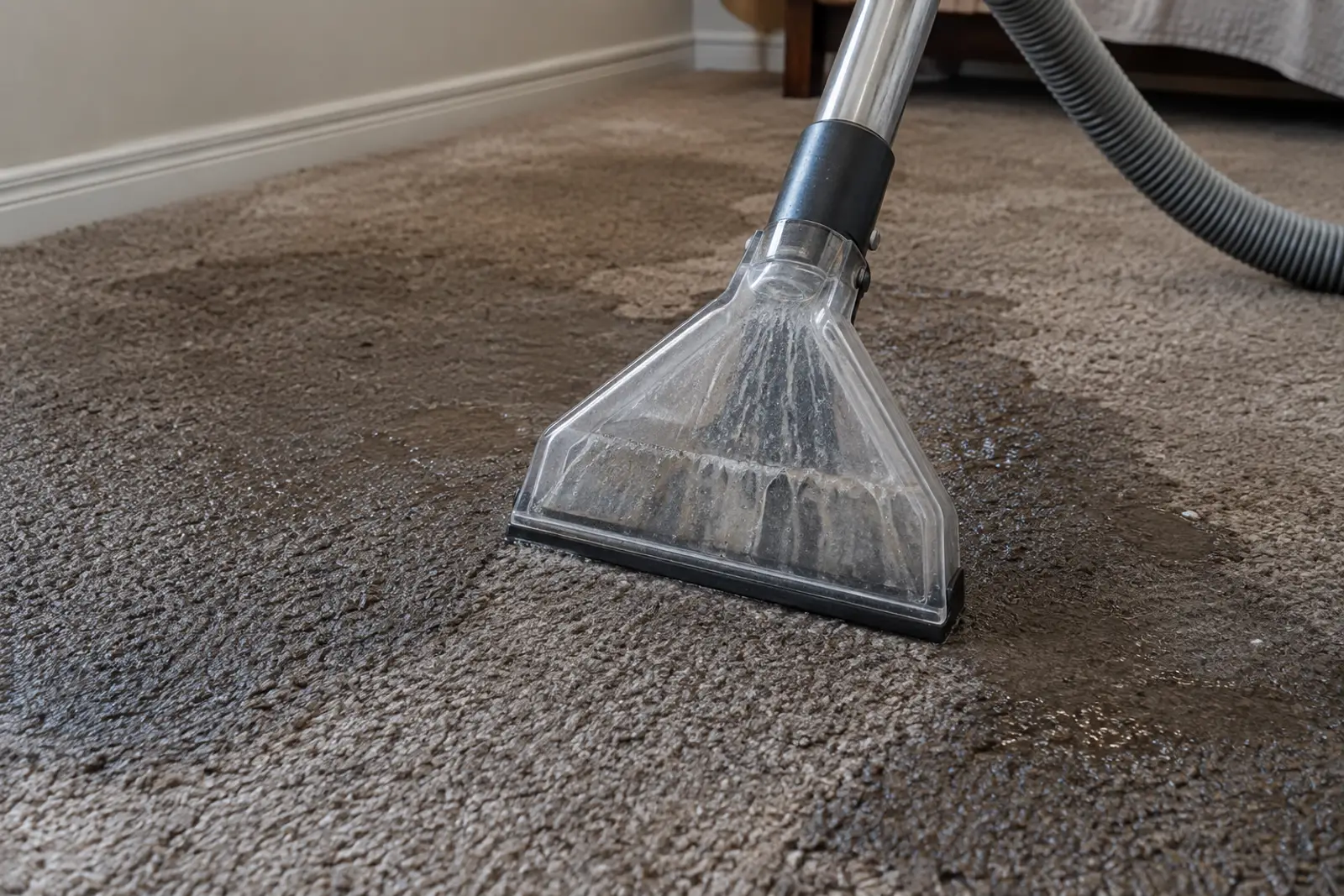
Water being extracted from a soaked carpet

Emergency water extraction in Hurst, TX

The water you can see is the easy part. Extraction gets it out; drying deals with everything it soaked into.

Call (817) 989-2837

Why the first day matters

Clean water from a supply line doesn't stay clean for long once it's sitting on a floor. It picks up what's in the carpet, the pad and the dust under the baseboards, and within a day or two it's a different job — more comes out, less can be dried in place.

Materials behave differently too. Tile and sealed concrete shrug off a few hours of water. Carpet pad, the bottom edge of drywall, particle-board cabinet bases and the underside of laminate don't, and once particle board swells it doesn't go back.

That's the whole case for calling early: not panic, just fewer things that have to be torn out.

What happens on site

The crew finds the source first, or confirms it's been stopped — there's no point extracting water that's still coming in.

Then they map it. Water travels further than it looks: under a baseboard into the next room, beneath flooring, up the inside of a wall. Moisture meters and, often, thermal cameras show where it went so nothing wet gets missed.

Extraction comes next — truck-mounted or portable units for standing water, and weighted extraction to pull water back out of carpet and pad. What can't be saved comes out.

Last, the drying setup: air movers along the walls, dehumidifiers pulling moisture out of the air, and readings taken each visit until the numbers say dry.

Words you'll hear on the day

Category 1, 2, 3 water
How clean the water is. Category 1 is clean — a supply line. Category 2 carries some contamination — a washing machine or dishwasher. Category 3 is grossly contaminated — sewage or water that's come in from outside. The category decides what can be kept.
Extraction
Pulling liquid water out mechanically, before any drying starts. It's far faster than letting water evaporate.
Air mover
A low, snail-shaped fan aimed along floors and walls. It moves air across wet surfaces so moisture leaves them faster.
Dehumidifier
Pulls the moisture the air movers release back out of the air. Without it, the water just moves from the floor into the room.
Moisture meter
A handheld probe or pad that reads how wet a material is. Drying is judged by readings, not by touch.
Flood cut
A straight cut along the bottom of a wet wall, usually a couple of feet up, to open the cavity so insulation and framing can dry or come out.
Pad and carpet
Often treated separately: the pad under wet carpet is frequently replaced while the carpet itself can sometimes be dried and relaid, depending on the water category.
Drying goal
The reading a material needs to reach before it's called dry — usually set against a dry area of the same house, not a fixed number.

Before they arrive

Stop the water at the meter if it's still running. Turn off power to rooms where water is near outlets, if you can reach the breaker without standing in water.

Lift what you can off the floor: rugs, electronics, anything paper, furniture legs onto foil or blocks. Take photos before anything moves.

Don't use a household vacuum on standing water, and don't start pulling up carpet yourself — the crew needs to see how far it went.

FAQ

I woke up to alarms and water everywhere. Does anyone come out at night?

Calls are answered any hour, and restoration companies take emergency jobs outside business hours. When a crew can get there depends on the company and how busy the night is — ask on the call. In the meantime, shut the water off and get people and pets out of the wet area.

How long does drying take?

Usually a few days for a clean-water loss caught early, longer if water reached wall cavities or sat for a while. The equipment stays until the readings say dry; it isn't on a fixed timer.

The carpet feels dry on top. Is it done?

Often not. Pad holds water long after the carpet surface dries, and the subfloor or slab underneath holds it longer still. A moisture meter will show it; a hand on the carpet won't.

Can I stay in the house while the equipment runs?

Usually, yes, for clean-water drying — it's noisy and warm, but most people stay. Sewage or other contaminated water is different; the affected area should be closed off until it's cleaned.

Standing water right now?

Call (817) 989-2837. Answered any hour across Hurst. Free call, no obligation.

Call (817) 989-2837